Have you ever noticed the crescent moon and star on mosques, flags, or Islamic art and wondered what it really means?
For many people around the world, this symbol instantly represents Islam. But the truth is a little deeper and more interesting than most people realize.
The Islam symbol meaning is not just about a visual sign. It reflects centuries of history, spiritual identity, and cultural expression within the Muslim world. While many assume it is an official religious symbol, its story actually blends faith, tradition, and history.
Understanding this symbol opens a window into Islamic culture, spirituality, and the way symbols evolve over time.
Let’s explore the real meaning behind it.
What Does Islam Symbol Mean?
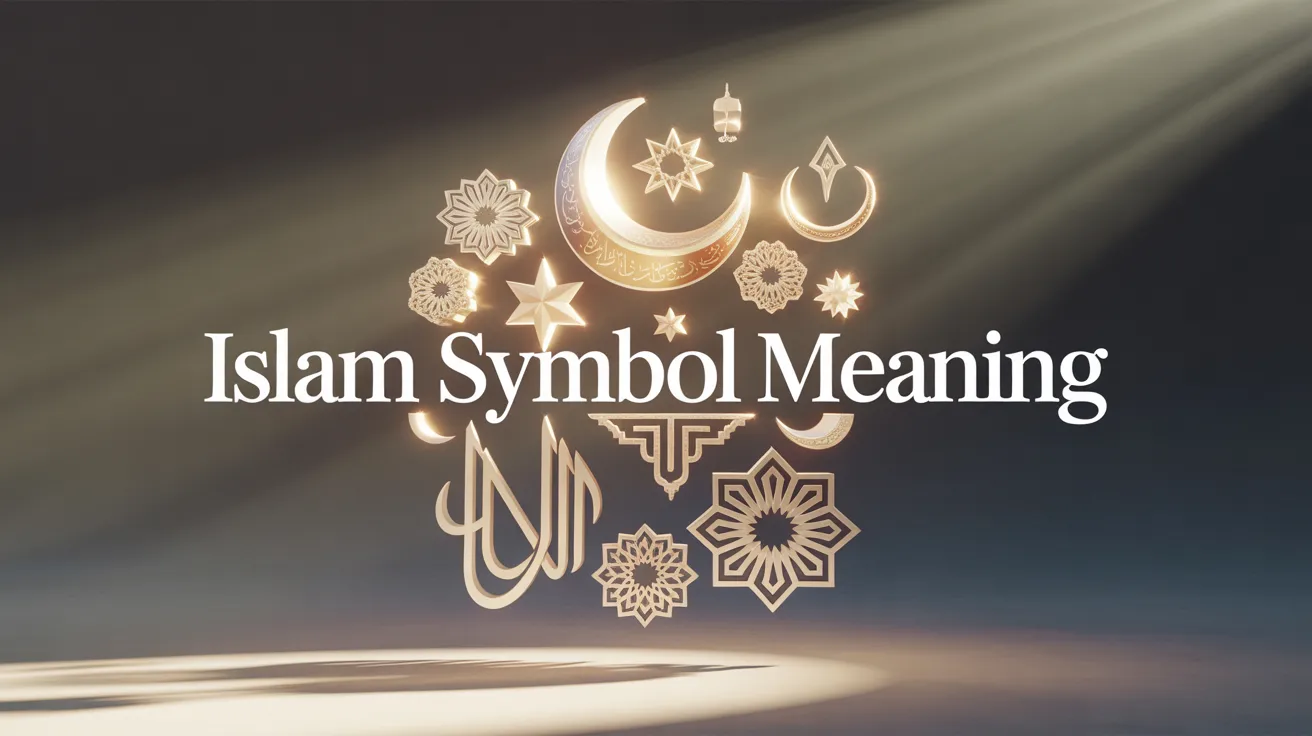
The symbol most commonly associated with Islam is the crescent moon and star.
Many people refer to it as the Islamic symbol, although it is not officially mentioned in the Qur’an as a required religious symbol.
The crescent and star generally represent:
- Guidance and light
- Faith and spiritual direction
- The lunar calendar used in Islam
Islam follows a lunar calendar, meaning months begin with the sighting of the new crescent moon. Important events like Ramadan and Eid depend on the moon’s appearance.
Because of this connection, the crescent moon became a meaningful visual representation of the faith.
Over time, Muslim communities began using it in architecture, flags, and art.
Deep Spiritual Meaning
Spiritually, the crescent moon symbolizes growth, renewal, and divine guidance.
Just like the moon grows from a thin crescent into a full moon, a believer’s faith grows through patience, prayer, and reflection.
The star often represents:
- Light in darkness
- Knowledge
- Divine guidance from God
Together, the crescent and star symbolize the idea that faith lights the path through life’s darkness.
In Islamic thought, guidance ultimately comes from Allah, and the symbol reminds believers to stay connected to faith and spiritual awareness.
Meaning in Love
Although the symbol is not directly connected to romantic love, it carries deeper emotional meanings that influence relationships.
Within Islamic culture, the crescent and star can represent:
- Balance in life
- Harmony between two souls
- Guidance in building a meaningful relationship
Many couples see the crescent as a reminder that love, like the moon, goes through phases—sometimes bright, sometimes quiet, but always present.
The star symbolizes the hope that love should guide people toward kindness, respect, and spiritual growth.
Symbolism Across Cultures
Interestingly, the crescent and star symbol existed in several cultures before becoming associated with Islam.
Ottoman Empire
The symbol became widely connected to Islam during the Ottoman Empire. Ottoman rulers used the crescent and star on flags, coins, and architecture.
As the empire expanded, the symbol became recognized globally as representing Muslim identity.
Central Asian Cultures
In many Central Asian regions, the crescent moon symbolized cosmic harmony and protection long before Islam spread there.
When Islam arrived, the symbol blended with Islamic identity naturally.
Modern Muslim Countries
Today, many Muslim-majority countries include the crescent and star on their national flags.
Examples include:
- Turkey
- Pakistan
- Algeria
- Tunisia
In these contexts, the symbol represents both religious heritage and national pride.
Emotional & Psychological Meaning
Symbols often influence people on a psychological level.
For many Muslims, the crescent and star evoke feelings of:
- Spiritual belonging
- Peace and calm
- Cultural identity
- Hope during difficult times
Seeing the symbol can remind believers of prayer, community, and their connection to faith.
It can also create a sense of unity among Muslims worldwide.
What It Means If You Keep Seeing It
If you keep noticing the Islamic crescent and star symbol, it may simply be because it appears frequently in Muslim communities.
However, on a personal level, some people interpret repeated encounters with religious symbols as reminders to:
- Reflect on spirituality
- Seek guidance in life decisions
- Reconnect with faith or inner values
Symbols often become meaningful when they appear during important moments in life.
Dream Meaning
Dreams involving Islamic symbols can carry emotional or spiritual interpretations.
Seeing the Crescent Moon
This often symbolizes:
- A new beginning
- Spiritual awakening
- Personal growth
Seeing a Bright Star
A star in dreams may represent hope, direction, or inspiration.
Seeing the Crescent and Star Together
This combination may symbolize guidance during uncertainty or a reminder to trust your spiritual path.
Dream meanings are always personal, so the emotions you felt during the dream matter most.
Personal Insight
Many people first connect with the crescent and star symbol through everyday experiences.
It might be the symbol on top of a mosque you pass by every day, the design on a country’s flag, or decorations during Ramadan.
For Muslims, the symbol can quietly represent something powerful: belonging to a global community of faith.
For others, learning about the symbol becomes an opportunity to understand Islamic culture beyond stereotypes.
Symbols are powerful because they carry stories. And the crescent and star carry centuries of history, faith, and identity.
What To Do / Practical Steps
If you’re curious about Islamic symbols and their meanings, here are a few helpful steps:
1. Learn about Islamic history
Understanding how symbols evolved helps you appreciate their deeper meaning.
2. Visit a mosque or cultural center
Seeing Islamic art and architecture in person can give you a richer perspective.
3. Study Islamic art
Islamic design is filled with meaningful patterns, calligraphy, and symbolism.
4. Ask respectful questions
Many Muslims are happy to share the cultural and spiritual meanings behind their traditions.
Learning directly from people often provides the most meaningful insights.
Real-Life Example
Imagine a traveler visiting Istanbul for the first time.
As the sun sets, they hear the call to prayer echo across the city. Above the skyline, dozens of mosques display the crescent moon symbol.
At that moment, the symbol is no longer just an image.
It becomes a representation of history, devotion, community, and spirituality.
This is how symbols work—they turn simple shapes into meaningful experiences.
FAQs
Is the crescent and star the official symbol of Islam?
No. Islam does not have an official religious symbol. The crescent and star became culturally associated with Islam over time.
Why is the crescent moon important in Islam?
Islam uses a lunar calendar, so the crescent moon marks the beginning of each month.
What does the star represent in the symbol?
The star often represents light, knowledge, and divine guidance.
Did the symbol originate in Islam?
No. The crescent symbol existed in earlier civilizations before being adopted by Muslim cultures.
Why do many Muslim countries use the crescent and star on their flags?
Many countries adopted the symbol due to historical influence from the Ottoman Empire.
Final Thoughts
The Islam symbol meaning goes far beyond a simple crescent and star.
It reflects centuries of history, cultural identity, and spiritual symbolism.
For many Muslims, the symbol is a reminder of faith, guidance, and connection to a global community. For others, learning about it opens the door to understanding a rich and diverse culture.
Symbols may look simple on the surface—but their meanings often carry deep human stories.
Call to Action
Next time you see the crescent moon and star on a mosque, flag, or piece of art, pause for a moment.
What story might that symbol be telling?
Sometimes, understanding a symbol is the first step toward understanding an entire culture.
Discover More Post
Black Sun Symbol Meaning The Hidden Power Behind This …
Fish Symbol Meaning Spiritual Messages Love Dreams …
Symbol Meaning Transformation Hope and the Beauty of …
