You’ve probably seen the Punisher skull on car stickers, military gear, tattoos, hoodies, or social media profiles. For some people, it represents strength and justice. For others, it feels intimidating, rebellious, or even controversial.
But the real meaning of the Punisher symbol goes much deeper than a simple skull logo.
Behind this bold image is a story about pain, revenge, survival, and the dark side of justice. The symbol connects emotionally with people who feel betrayed, unheard, or determined to fight through life’s hardest battles.
So why has this symbol become so powerful around the world? And what does it truly mean on a spiritual, emotional, and psychological level?
Let’s explore the deeper layers behind the Punisher symbol meaning.
What Does the Punisher Symbol Mean?
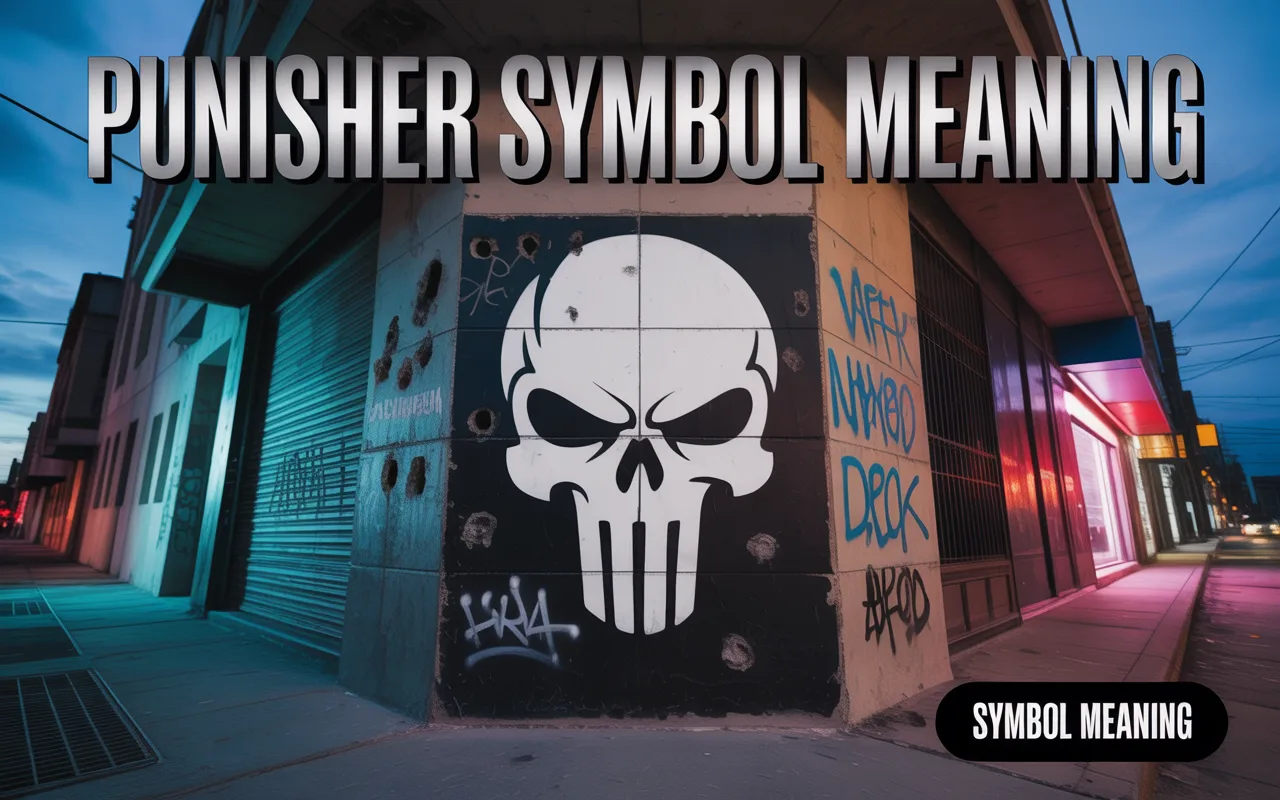
The Punisher symbol is a white skull logo connected to the fictional Marvel character The Punisher, also known as Frank Castle.
At its core, the Punisher symbol represents:
- Revenge against injustice
- Strength through suffering
- Fearlessness
- Protection
- Vigilante justice
- Survival after trauma
- Refusal to be weak
The skull itself symbolizes death and danger, but in the Punisher’s story, it also reflects emotional pain and the loss of innocence.
Unlike traditional superheroes, the Punisher does not believe evil can always be solved peacefully. That darker philosophy is one reason the symbol feels emotionally intense and powerful.
For many fans, the skull stands for resilience — the idea that even after losing everything, a person can still keep fighting.
Deep Spiritual / Emotional Meaning
Spiritually, the Punisher symbol often reflects transformation through pain.
The skull imagery reminds people that life is temporary. It pushes the idea that hardship can either destroy you or reshape you into someone mentally stronger.
Emotionally, this symbol connects with people who have experienced:
- Betrayal
- Trauma
- Loss
- Anger
- Emotional isolation
- Survival after difficult experiences
Many people don’t wear the Punisher symbol because they support violence. Instead, they relate to the emotional message behind it: “I survived something painful, and I refuse to break.”
In a deeper sense, the symbol can represent shadow energy — the hidden anger and pain people carry inside but rarely talk about openly.
Meaning in Love
In relationships, the Punisher symbol can symbolize emotional protection and guarded feelings.
Someone drawn to this symbol in love may:
- Fear vulnerability
- Protect their heart intensely
- Value loyalty above everything
- Struggle to forgive betrayal
- Love deeply but cautiously
The symbol may also reflect a “protector personality.” These individuals often feel responsible for defending the people they care about.
However, emotionally, it can also reveal unresolved pain. Sometimes people who strongly identify with the Punisher energy use emotional walls to avoid getting hurt again.
In healthy relationships, this energy can evolve into loyalty and emotional strength instead of anger or emotional distance.
Symbolism Across Cultures
Western Culture
In Western pop culture, the Punisher symbol is strongly associated with rebellion, anti-heroes, and standing against corruption.
It became especially popular through comics, movies, gaming culture, and military-inspired fashion.
For many people, it symbolizes toughness and independence.
Ancient Skull Symbolism
Long before the Punisher existed, skulls symbolized mortality across many ancient civilizations.
In some traditions, skulls reminded people to live bravely because life is temporary.
This idea connects strongly with the Punisher theme of living without fear.
Mexican Culture – Día de los Muertos
In Día de los Muertos traditions, skulls are not always negative. They can symbolize remembrance, spiritual connection, and honoring loved ones who passed away.
While the Punisher skull is darker in tone, both symbols use skull imagery to confront mortality directly instead of hiding from it.
Emotional & Psychological Meaning
Psychologically, the Punisher symbol often represents personal control in a chaotic world.
People are frequently drawn to it during emotionally difficult periods because it creates feelings of:
- Power
- Protection
- Emotional armor
- Defiance
- Mental toughness
The symbol can become a coping mechanism — a visual reminder to stay strong when life feels unfair.
At the same time, psychologists sometimes associate aggressive symbols with suppressed anger or emotional pain. That doesn’t make the symbol “bad,” but it does show how deeply symbols can connect to human emotions.
The Punisher logo especially appeals to people who feel society failed them in some way.
What It Means If You Keep Seeing It
If you keep noticing the Punisher symbol repeatedly, it may reflect something happening emotionally in your life.
You may currently be:
- Fighting internal battles
- Trying to regain personal power
- Feeling emotionally defensive
- Recovering from betrayal
- Seeking justice or fairness
Sometimes repeated symbols appear because your mind emotionally connects to their message.
The Punisher symbol can act as a reminder to ask yourself:
- Am I protecting myself too much?
- Is my anger helping or hurting me?
- What pain am I still carrying?
- How can I turn pain into strength instead of bitterness?
In this way, the symbol becomes more than an image — it becomes emotional reflection.
Dream Meaning
Dreaming about the Punisher symbol can carry different meanings depending on the situation.
Seeing the Skull Clearly
This may symbolize inner strength awakening during a stressful period.
Your subconscious could be reminding you that you are tougher than you think.
Wearing the Punisher Symbol
This often represents emotional defense mechanisms.
You may be protecting yourself emotionally or trying to appear stronger than you feel inside.
A Broken or Damaged Skull
This can symbolize emotional exhaustion, burnout, or unresolved pain.
It may indicate that anger or stress is becoming emotionally heavy.
Fighting Alongside the Punisher
This dream may reflect your desire to confront injustice or defend yourself in waking life.
It often appears during periods of emotional frustration.
Personal Insight Section
One fascinating thing about the Punisher symbol is that people rarely connect to it for shallow reasons.
Most individuals who strongly relate to this symbol have gone through something emotionally difficult at some point in life.
Sometimes it’s heartbreak. Sometimes it’s bullying, betrayal, failure, or years of feeling powerless.
The symbol becomes personal because it visually expresses emotions people struggle to explain with words.
A lot of people don’t want revenge. They simply want to feel strong again.
That emotional layer is what makes the Punisher symbol so culturally powerful. It speaks to the part of human nature that wants to survive pain without appearing weak.
But there’s also an important balance here.
True strength is not living in anger forever. Real strength is learning how to heal without losing your resilience.
That’s the deeper lesson many people eventually discover behind the symbol.
What To Do / Practical Steps
If the Punisher symbol deeply resonates with you, here are some healthy ways to explore its meaning in your life:
Reflect on Your Emotions
Ask yourself what specifically attracts you to the symbol.
Is it strength? Protection? Anger? Survival?
Self-awareness helps uncover deeper emotional truths.
Channel Pain Productively
Instead of holding onto rage, use difficult experiences to fuel growth, discipline, creativity, or self-improvement.
Build Emotional Strength
Real resilience includes emotional intelligence, not just toughness.
Learning to trust and heal can be more powerful than emotional walls.
Use Symbols Mindfully
Symbols carry energy and emotional influence.
Choose to connect with the positive aspects — courage, survival, determination — rather than destructive anger.
Real-Life Example
A man who survived years of severe bullying once shared why he tattooed the Punisher symbol on his arm.
People assumed he wanted to look dangerous, but his reason was completely different.
He said the skull reminded him that he survived a period in life where he constantly felt powerless.
Every time he looked at it, he remembered not to let fear control him anymore.
That story reflects why the Punisher symbol continues to resonate emotionally with millions of people. For many, it’s less about violence and more about survival.
FAQs
Is the Punisher symbol evil?
No. The symbol itself is not inherently evil. Its meaning depends on personal interpretation and how people emotionally connect to it.
Why do people wear the Punisher skull?
Many people wear it to symbolize strength, resilience, protection, or standing against injustice.
What does the Punisher symbol mean spiritually?
Spiritually, it can represent transformation through suffering, inner strength, and confronting darkness within oneself.
Is the Punisher symbol controversial?
Yes. Over time, different groups and individuals have used the symbol in various ways, which has created public debate around its meaning.
Does the Punisher symbol represent revenge?
Partly, yes. The original character’s story is deeply connected to revenge and vigilante justice after personal tragedy.
Final Thoughts
The Punisher symbol is far more than a skull logo.
It represents pain, survival, anger, protection, emotional armor, and the human desire to reclaim strength after suffering.
That’s why it continues to resonate so deeply across cultures and generations.
But its deepest message may not be about punishment at all.
It may actually be about endurance — the quiet determination to keep going even after life changes you forever.
And sometimes, that emotional truth is what people connect to most.
Call To Action
Have you ever connected emotionally to a symbol without fully understanding why?
The Punisher skull challenges us to reflect on our own pain, strength, and personal transformation. What does it mean to you?
Discover More Post
Deep Meaning Meaningful Symbol Finger Tattoos Tiny Ink …
Mason Symbol Meaning Hidden Wisdom Brotherhood and …
Raven Symbol Meaning Spiritual Messages Transformation …
